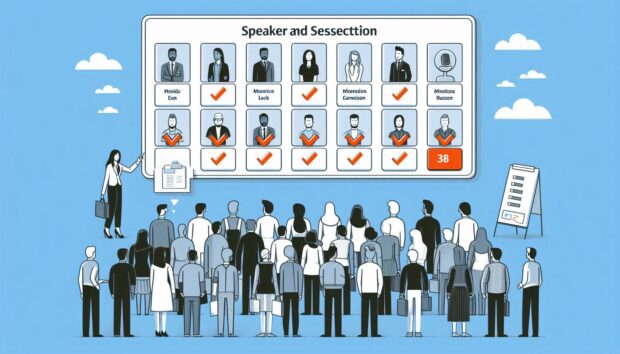
Uffda. This is the recurring (now annual) “picking sessions and speakers for an event is hard” post.
How it starts
- 32 session slots available (8 rooms, 4 time slots)
- Of these, we reserve 4 for potential sponsored sessions. These may be freed up for other content as we get closer to the event if we don’t find sponsors to fill them.
- This leaves 28 session slots for community speaker sessions
- NOTE: We’ve had more rooms in the past, but this tends to dilute attendance per session. Fewer rooms tend to raise the number of attendees per session which is nice for presenters. Like anything this is a variable we tweak and adjust as we don’t want rooms too crowded either.
- 109 sessions submitted from 53 speakers
- Yes – a LOT of Copilot/AI topics this time around. We’ll have plenty but there’s still lots of other relevant topics to talk about.
- We had a notable jump in new speakers submitting – mostly out of town folks that we don’t know personally. I’m curious what drove that… We didn’t change anything that I’m aware of when it comes to Call for Speakers or communications. Interesting.
- As with every event, we also had a number of “regulars” – friends and colleagues – that didn’t submit, which is disappointing. They each have their reasons. When it’s our fault with scheduling it hurts a bit, but we do our best – scheduling is also tough. It’s a bummer to miss opportunities to host and hang out with friends we’ve made in the community.
Our community is blessed with so many folks full of ideas, with wide varieties of experiences, and with the willingness and skills to share their knowledge with others.
Now, expectation setting… We never get this 100% correct for everyone. We guess who’s going to attend and what they want to hear. We base our decisions on previous events, on what we know about the technology, the topics, the speakers, past attendees, and all sorts of input. But we do our best to balance what we can.
Our panel consists of members of the leadership team. Your event and approach may vary. I’m sure there are other variations and ways to do this – maybe put together a content committee or something along those lines. We tend towards simplicity, so here we are.
Priorities, Variables, and Factors… How it comes together
There are a bunch of things we work towards balancing. We want to invite out-of-town speakers, but we like to favor local folks where we can as well. We want to give new speakers an opportunity to speak while also providing known quality speakers for attendees. Because of these priorities we don’t use the blind selection method (looking at titles and abstracts while hiding speaker names).
We leverage our event tool Sessionize where and how we can, sometimes using their selection/rating system and process, sometimes we tweak the methods. The tool does a wonderful job of collecting submissions and later notifying folks once decisions are made.
When it comes to topics, we try to find a variety of timely and relevant topics that apply to our attendee base. We’ll compare similar looking sessions. We’ll look for sessions that appeal to different roles in the M365 world, different products, etc.
Once we get the number of prospect sessions down to around the number we need, we switch gears and start looking at how those sessions fit into slots in the schedule. If we have too few or too many sessions around a topic or what might turn into a topic “track” then we start to massage the schedule to work as well as we can.
Our event doesn’t usually have a keynote. We’ve got a room for it now (we didn’t for a number of years) but attendees seem to prefer filling the time with as many sessions as possible. Better to have 8 topics to choose from for one of the time slots rather than just one and hope it appeals to most.
Finally, we slot the sessions and review the schedule for topic conflicts, overlaps, if speakers have more than one session (not many) they aren’t scheduled at the same time, etc.
Setting the schedule
We whittled the list down to 29 sessions (1 sponsor and 28 community sessions) with a number of backup sessions from the queue of speakers.
We have 33 speakers – a few sessions include more than one presenter. This means we have to turn down 20 folks. This is one of the hardest parts of the process. So many folks that took some of their valuable time to create sessions, write abstracts, and come up with titles. We don’t have room for them all to present, but we are thankful for them and hope they submit again.
Thoughts…
The concept of a content panel is interesting. It might be something to look at if attendee numbers continue to rise. We could also do some more polling of attendees to see what topics folks are interested to either verify our assumptions or give us more data to work with.
We get a step closer to the event…